2026-09-04
How detailed should your AI prompt be?
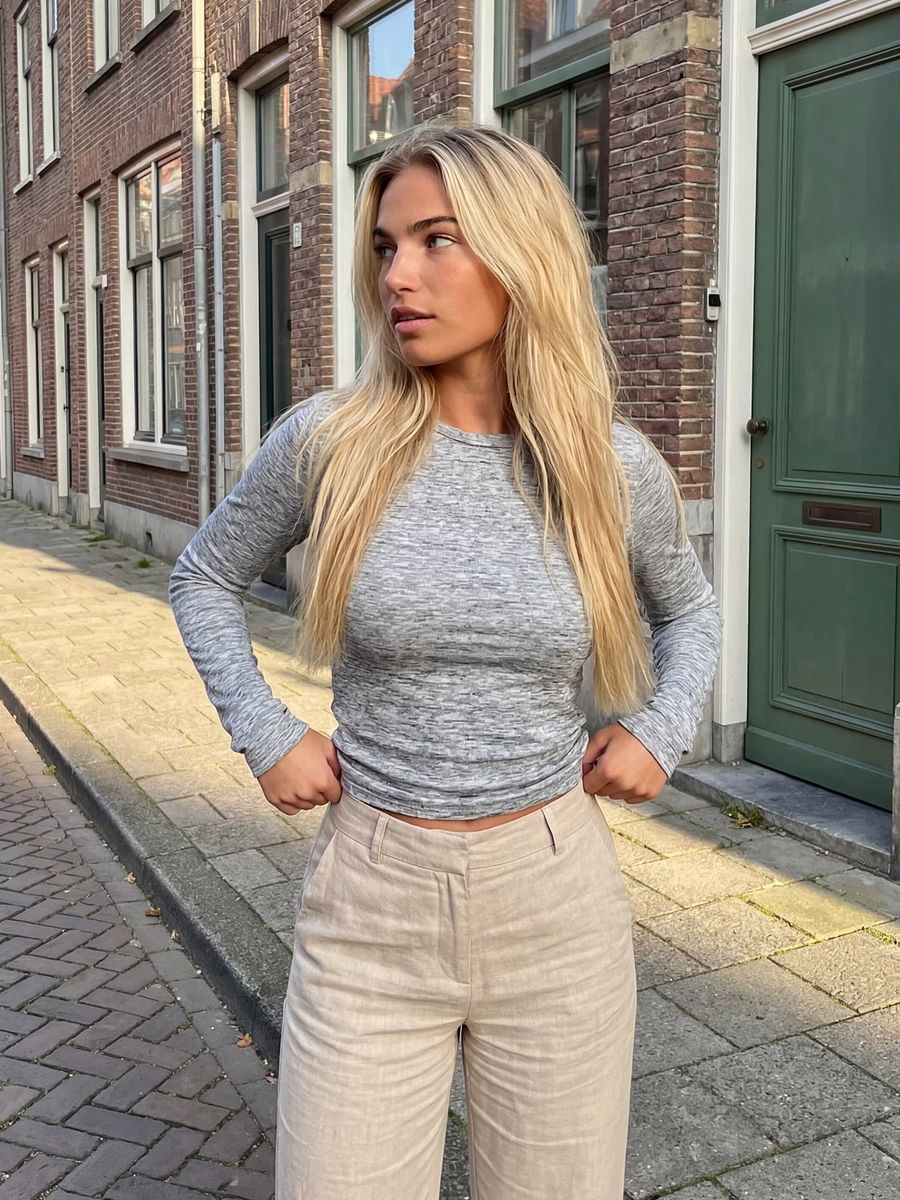
Your AI prompt is specific enough once you have named everything that can make or break your result, and deliberately left the rest open so the model can fill it in with its strongest, most probable interpretation. So more detail is not automatically better. There is a sweet spot between too vague and overloaded, and it shifts per task and per model.
What happens when your prompt is too vague?
A prompt that is too vague produces an average image, because the model falls back on the most probable reading of your words. Image models are trained on billions of image-text pairs and map loose descriptions to a statistical average.
Ask for "a woman in a city" and you get flat, moodless light and a pose without intent: the average of everything the model ever saw. Vagueness is not neutral. Every choice you leave open, the model fills with the most obvious answer.
The fix is not to describe everything, but to name the things that carry your intent: light, mood, camera angle and time of day.
What happens when your prompt is too specific?
Too much detail works against you: contradicting instructions, diluted attention and, on older models, a hard token limit. Classic CLIP text encoders read a maximum of 77 tokens, but in practice only about the first 20 tokens (roughly your first fifteen words) really contribute to the image; positions after that are barely trained (Long-CLIP, ECCV 2024).
So a wall of adjectives after your core description barely registers. On top of that, too many separate attributes start fighting each other: the model averages them out, ignores a few, or lets colors and traits leak onto the wrong subject.
What do you lock down and what do you leave open?
Lock down what makes or breaks your result, and leave open what you do not care about. That is the heart of a good prompt.
Lock down:
- The subject and the one or two attributes that genuinely matter
- The aspect ratio and framing, because they decide the composition
- Light and mood, since they carry the emotion of the image
- Anything that must stay consistent across a series (face, outfit, color palette)
Leave open:
- Details you will not control or even notice, like stray props in the background
- Exact finger positions or micro-details the model fills in better on its own
- Colors or elements that do not serve your goal
How does this differ per model?
Newer models read longer, natural prompts; older CLIP models dilute long descriptions faster. Encoders based on T5 or natural language, like the modern models behind AI Formule, handle full sentences and longer descriptions without cutting off early.
So on a modern model you can write things out more calmly in plain language. On a classic CLIP model you put your essentials first, because your early tokens carry the most weight. In both cases, contradicting instructions remain your biggest enemy.
How do you find the right amount of detail?
Start with a middle ground and add detail only where the result misses your intent. That keeps you steering on purpose instead of stacking blindly:
- Write a prompt with subject, light, mood and framing.
- Render and see what strays from what you meant.
- Add one targeted sentence for exactly that gap, not ten loose adjectives.
- Repeat until it lands.
Because you pay per render, you can cheaply run a few variations to see how much steering you actually need. Prefer to go from a plain description to a structured prompt? Let the prompt generator write out the scene, the light and the composition for you.
Frequently asked questions
Is a longer prompt always better?
No. More words only help if they add new, non-contradicting information. Beyond a certain point, extra details dilute attention or clash with each other.
How many words is a good prompt?
There is no fixed number. A common rule of thumb sits around 50 to 150 words for a photo: enough to lock down subject, light, mood and framing without overloading. On older CLIP models your first ~20 tokens carry the most weight.
Should I always describe the background?
Only if it carries your story. Leave the background open and the model picks something plausible. Want a specific place or mood, then name the location, the light and the time of day.
Does leaving things vague ever work better?
Yes. For variety or a brainstorm you deliberately leave room, so the model offers different directions. Once you pick a direction, you make it more specific step by step.
The shortest route to a sharp prompt is not "more" but "more targeted": lock down what counts, let the rest go and adjust based on what you see. Create an account and test in the photo generator how much steering your image really needs.