2026-07-30
Leading lines in AI photos: guide the eye to your subject
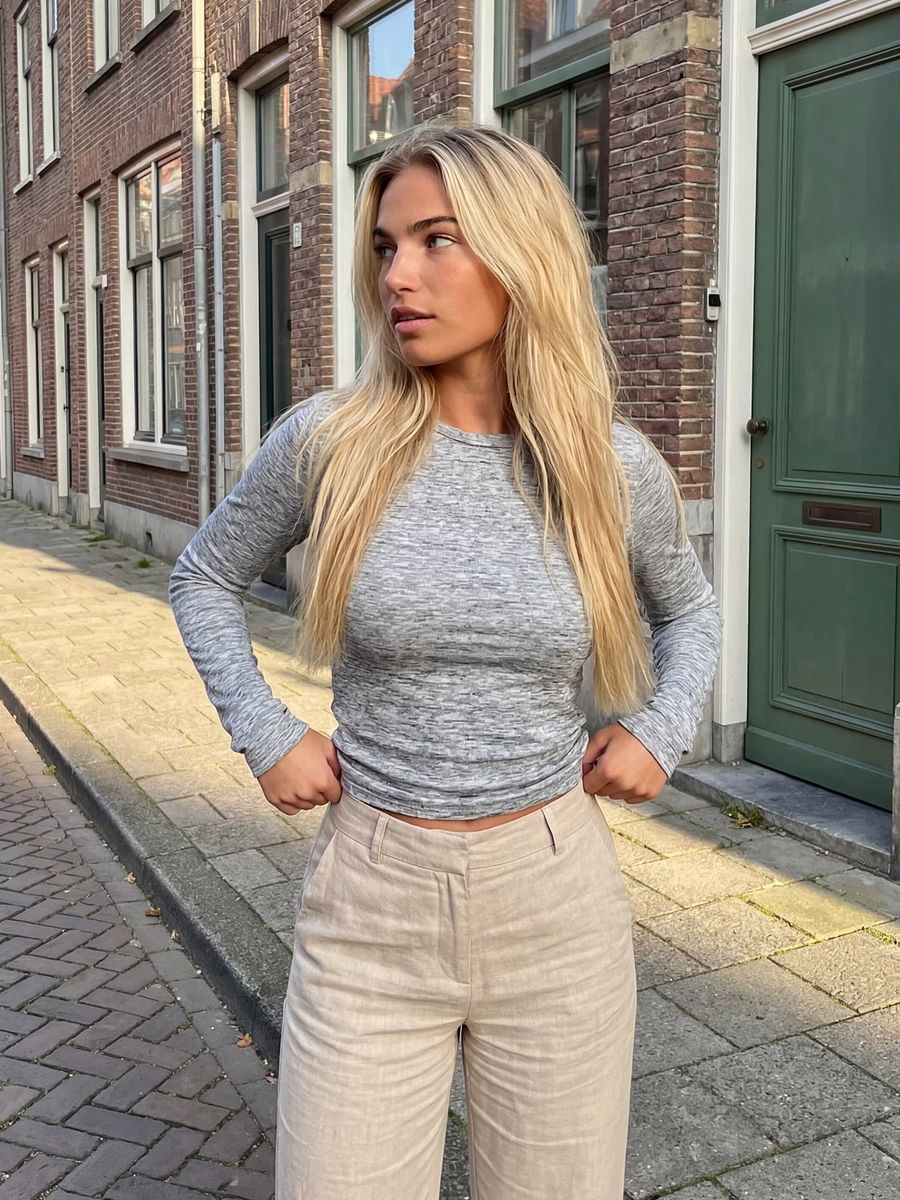
Leading lines are natural or built lines in an image, such as a road, a railing, a river or a row of lamps, that pull the viewer's eye toward your subject. In an AI photo they are one of the strongest ways to control composition: you decide not only what is in frame, but where the eye goes first.
Why leading lines work so well
A viewer decides where to look in a fraction of a second. In 2014, neuroscientists at MIT showed that the brain can identify an image seen for as little as 13 milliseconds, far faster than the 100 milliseconds previously assumed (MIT News). In a busy feed you don't have a second to tell your story, you have a blink. Leading lines do that work for you: they hand the eye a route to the subject before the viewer consciously registers what they are seeing.
What each type of line signals
Not every line steers the same way. The direction sets the mood:
- Diagonal lines add energy and tension. They pull the eye at an angle through the frame and work well for action or drama.
- Horizontal lines, like a horizon or waterline, feel calm and stable.
- Vertical lines, like buildings or trees, convey power and height and lead the eye up or down.
- Curved lines, like a winding path or a river, feel softer and ease the eye into the scene.
Pick the type of line that fits the feeling of your post, not just the location.
How to describe leading lines in your prompt
Name the line, the direction and the end point. A model only places a line on purpose when you say where it starts and where it leads. Useful building blocks:
- The line itself: "a wooden boardwalk", "a curved cobblestone path", "railway tracks", "a row of streetlights".
- The direction: "leading from the bottom edge toward the subject", "diagonal lines converging on her".
- The subject at the end point: place your person or product where the lines meet.
An example: "a woman standing at the end of a long wooden pier, the planks forming strong leading lines from the foreground toward her, wide-angle lens, golden hour". A wide-angle lens exaggerates perspective and makes the lines stronger, so mention 'wide-angle' when you want a pronounced effect. If you're stuck, the prompt generator writes a full description for you.
Common mistakes (and how to avoid them)
Most failed compositions have a line that does not lead to the subject. Watch for these three:
- The line runs out of the frame. A road pointing at the edge carries the eye away from your subject. Let lines run inward.
- Too many competing lines. Five directions at once is not a route, it's noise. Keep one clear main line.
- The subject isn't at the end point. If the lines meet on an empty spot, the viewer looks at nothing. Place your subject where the lines point.
Generate a few variations in the photo generator and pick the version where the line truly pulls your eye to the subject.
Leading lines in AI video
In video you strengthen the effect by moving the camera along the line. A dolly or tracking shot that follows a road, a hallway or a railing literally draws the viewer into the scene. Describe both the line and the movement: "camera slowly dollies forward along the corridor toward the subject at the end". That keeps the eye hooked on the same end point throughout the shot. In the video generator you combine that line and camera movement in one prompt.
Frequently asked questions
What are leading lines in a photo?
Leading lines are lines in the image, such as roads, paths, rails or architecture, that steer the viewer's eye toward the subject. They give a photo a clear route and a stronger focal point.
What's the difference from gaze direction?
Gaze direction steers the viewer through where your subject is looking; leading lines do it through physical lines in the scene itself. You can combine both for an even clearer focal point.
Which lens works best for leading lines?
A wide-angle lens (for example 24mm) exaggerates perspective, so lines appear to run more strongly toward the subject. Mention 'wide-angle' or a short focal length in your prompt for a pronounced effect.
Can one image have multiple leading lines?
Yes, but keep one main line dominant. Several lines meeting at the same point reinforce each other; lines pointing in different directions weaken the composition.
Leading lines are a free tool: they cost nothing extra and make almost any image stronger. Create an account and test in a few renders how a single line pulls the eye to your subject.