2026-07-28
Gaze Direction in AI Photos: Lead the Viewer's Eye
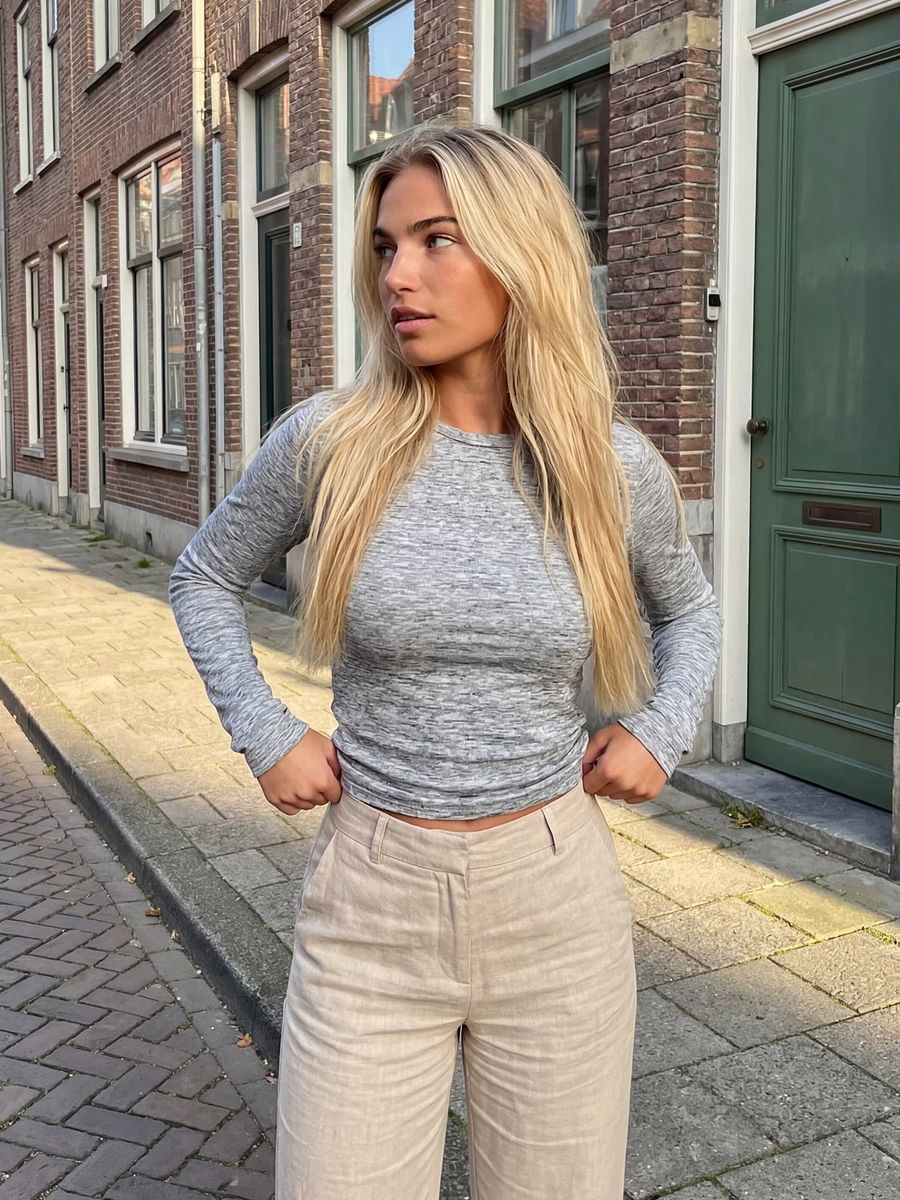
Gaze direction is a composition tool: where your subject looks, the viewer looks too, so the direction of your character's gaze decides where attention travels in the image. Most creators focus on the face itself, not on the direction of the gaze. That is a missed opportunity, because that direction steers the viewer's eye and decides whether your image feels calm or awkward. Here is how gaze direction and lead room work, and how to steer them in your prompt.
What are gaze direction and lead room?
Gaze direction is the side your subject looks toward or moves toward. Lead room (also called nose room or looking room) is the open space you leave in the frame on the side your subject is looking or walking.
By the common definition, a well-composed shot leaves space in the direction the subject is facing or moving. If your model looks to the right, there should be space between the face and the right edge. That keeps the image readable and natural; the eye expects to see a bit of room in front of the subject.
Why viewers automatically follow the gaze
People instinctively follow another person's gaze, a reflex known as "gaze cueing" or gaze-following that develops early in life. See someone looking at something, and you look the same way.
The effect is measurable. According to an eye-tracking study by Palcu et al. (2017), viewers were more than four times as likely to look at a target area when the model looked toward it rather than away from it. For you, that means the gaze of your subject steers the viewer's attention.
There are two useful choices:
- A direct gaze (straight into the camera) builds connection and works well for a portrait or a personal message.
- An averted gaze (toward something in the scene) leads attention to a product, another person, or the space where your text will go.
Leave room in the direction of the gaze
The practical rule: place your subject on one side of the frame and keep the space open on the side it looks or moves toward. The rule of thirds helps. You divide the image into a grid of nine parts (three by three) with four intersection points, put your subject on one of those points, and leave most of the room in the direction of the gaze.
The same goes for motion. Give a car or a walking person space ahead of them and the viewer sees there is somewhere to go. Without it, the subject looks pinned against the edge and the image feels awkward.
How to steer the gaze in your prompt
Without guidance, AI models often pick a frontal, centered gaze. So name the direction explicitly.
- Describe the gaze literally: "looking to the left, out of frame," "gaze fixed on the glass on the table," or "looking straight into the camera."
- Describe the placement too: "subject on the left, open space on the right," so the gaze has somewhere to travel.
- Tie the gaze to a goal: have your character look at the product or at the spot reserved for your title text.
- For video: state the direction of movement and leave room in front of the subject so the motion looks natural. Use the video generator.
- After the render, check that the gaze really points the right way. If not, generate again or fix it with image-to-image in the photo generator.
Not sure how to phrase it? The prompt generator helps you capture composition, gaze, and framing in a single prompt.
Frequently asked questions
What is the difference between a direct and an averted gaze?
A direct gaze looks straight into the camera and connects with the viewer. An averted gaze looks at something in the scene and leads the viewer's attention that way.
How much room should I leave in the direction of the gaze?
Enough for the image to breathe. As a rule of thumb, place the subject about one third into the frame and leave the other two thirds open in the direction of the gaze. Too little feels cramped, too much leaves the image empty.
Why does my AI character always look straight ahead?
Without guidance the model often picks a frontal, centered gaze. Name the gaze direction explicitly in your prompt and describe where the open space should be.
Gaze direction is one of the cheapest ways to steer your image: it costs you one sentence in your prompt. Create an account and test how a different gaze changes your entire composition.