2026-08-14
Framing your AI photo: rule of thirds and headroom
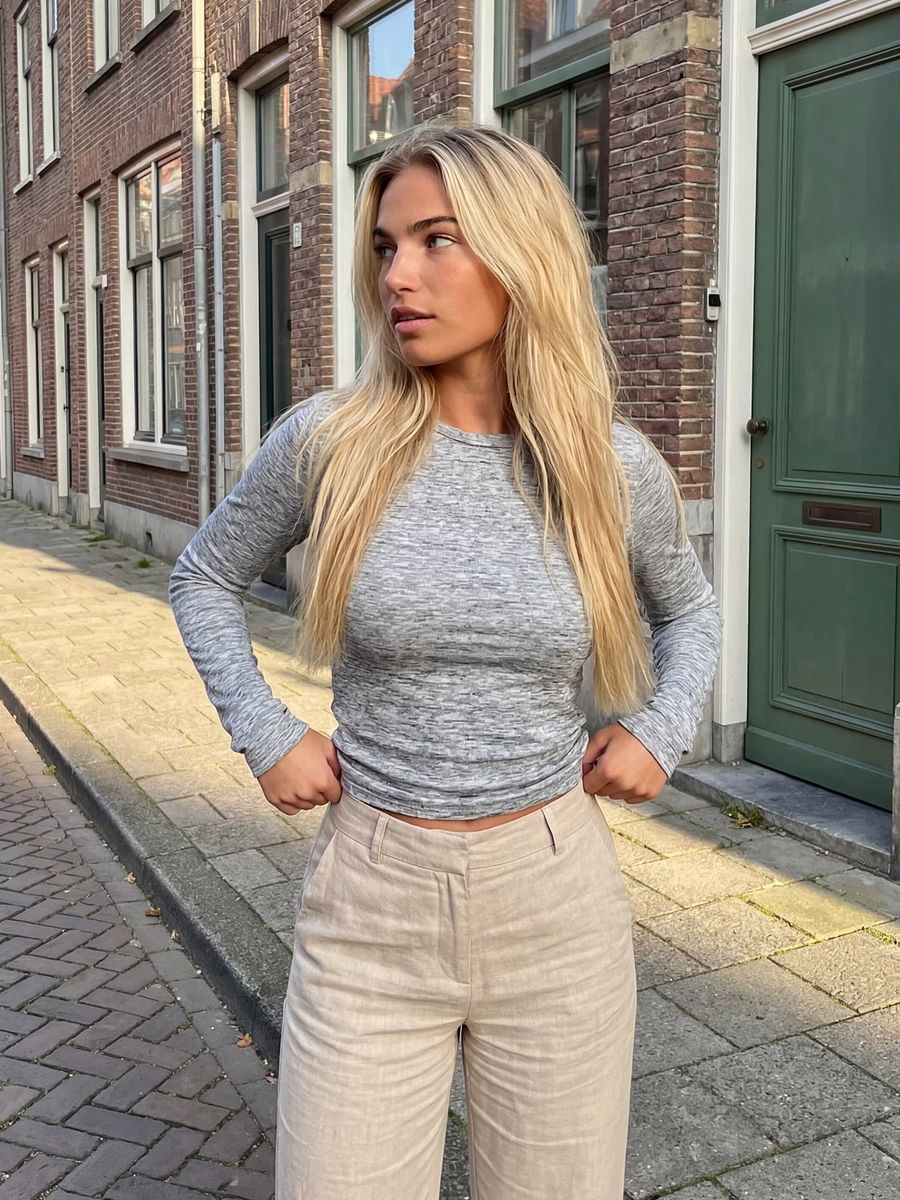
Don't put your subject dead center by default; place the face, the eyes or the direction of the gaze on one of the frame's third lines, and an AI photo instantly looks calmer and more balanced than with random placement. The rule of thirds, headroom and looking room are three simple frameworks you can name directly in your prompt, so the model puts your subject in the right spot instead of guessing.
What is the rule of thirds?
The rule of thirds divides your image into nine equal sections using two horizontal and two vertical lines, and you place important elements along those lines or on one of the four intersections. Those intersections are sometimes called "power points". The rule isn't new: painter John Thomas Smith described it back in 1797 in his book Remarks on Rural Scenery (source: Wikipedia).
For an AI portrait this means: don't put the face exactly in the middle, but slightly to the left or right, with the eyes roughly on the upper third line. A subject on an intersection creates more tension and more calm at once than a tightly centered frame.
Headroom: the space above the head
Headroom is the space between the top of the head and the top edge of the frame. As a rule of thumb, place the eyes about one third down from the top. Too much space above the head creates "dead" emptiness; too little makes the image feel cramped or accidentally clips the crown of the head.
- Tight portrait: little headroom, eyes on the upper third line.
- Medium or wide shot: a bit more headroom, but don't let the head float in the middle.
- Prompt terms that work: "eyes on the upper third line", "small amount of headroom", "head near the top third".
Looking room: let your subject look into the scene
Looking room (also called lead room or nose room) is the space on the side your subject is looking or moving toward. If someone looks to the right, leave the most space on the right. With the rule of thirds your subject then sits on the left and looks into about two thirds of the frame. Without that space the character seems to be staring into the edge, and the whole image feels awkward.
The same applies to video: a walking or running character needs room in the direction it moves, otherwise it looks like it's about to walk out of frame.
How to name framing in your AI prompt
AI models read loose concepts, not full sentences, so state the placement short and explicitly. Combine a composition term with a direction:
- Pick the aspect ratio before you generate. A vertical 9:16 image calls for different placement than a horizontal 16:9 one. The AI Photo Generator offers seven ratios, from 1:1 to 9:16.
- Name the composition: "rule of thirds composition", "subject on the left third", "off-center portrait".
- Add gaze and space: "looking to the right with lead room", "gaze toward the open space".
- Not sure about the placement? Let the prompt generator write a few variants and render two or three. Because you pay per render, testing composition costs little.
When to center your subject after all
The rule of thirds is a guideline, not a law. A tightly centered, symmetrical frame actually works well for a straight-into-the-lens portrait, a mirror shot or an architecture shot where the symmetry itself is the subject. Make that choice on purpose: center for calm and confrontation, place off-center to suggest movement and space. What you want to avoid is a subject that drifts half out of the middle for no reason.
Frequently asked questions
Does the rule of thirds work for video too?
Yes. The same placement applies to moving images, with one addition: give a moving subject lead room in the direction it walks or looks, so it doesn't bump into the frame edge.
How much headroom is too much?
If there's a clear strip of empty sky above the head that adds nothing, it's too much. Aim for the eyes around the upper third line. In a close-up, the crown of the head may fall just outside the frame.
Can I still adjust the composition afterward?
Partly. You can crop to improve placement, but then you lose resolution and aspect ratio. It's better to lock the composition in your prompt and aspect ratio up front and render a few variants.
Want to practice framing yourself? Create an account and use a few cheap renders to test where your subject looks best.