2026-08-16
Dutch angle in AI images: tilt the horizon on purpose
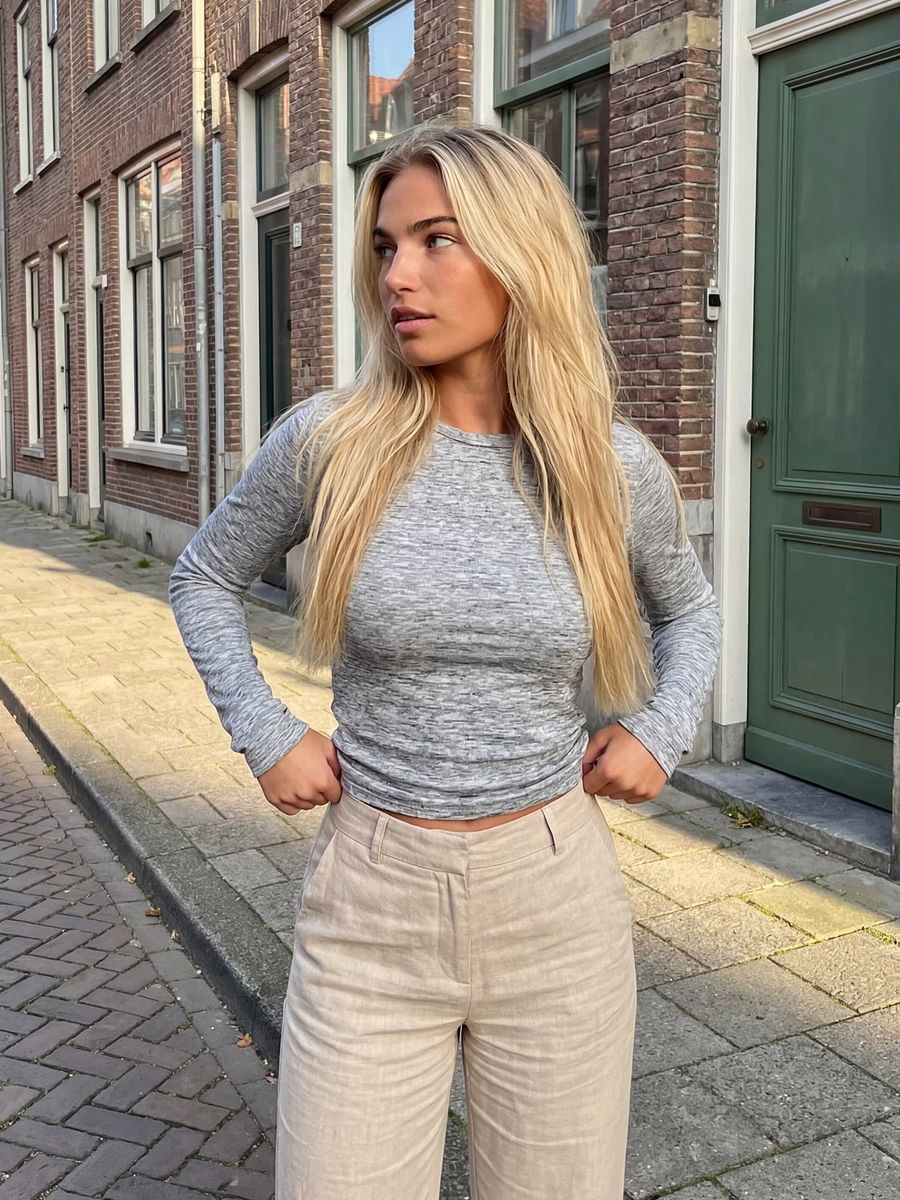
A dutch angle is a shot where you deliberately tilt the camera, so the horizon runs at a slant and vertical lines lean across the frame. The effect is tension, unease, or disorientation: your subject looks off balance. In AI images you have no tripod to tilt, so you call up that look with the right words in your prompt. Do it on purpose and it strengthens your story. Do it by accident or too subtly, and your image just looks crookedly shot.
What is a dutch angle and where does the name come from?
A dutch angle (also called a dutch tilt or canted angle) is a tilted shot where the horizon line is not parallel to the bottom of the frame. The goal is to create a sense of unease or tension in the viewer, because the world is literally off its axis.
Despite the name, the technique has nothing to do with the Netherlands. According to Wikipedia, "Dutch" is likely a corruption of the German word "Deutsch", because the tilted shot was widely used in early German silent film. The earliest recorded use dates back to 1906, in the short film Dream of a Rarebit Fiend. Classics like The Third Man (1949) leaned on it heavily, and in the 1960s Batman TV series each villain even got their own tilt angle, because they were "crooked".
When does a tilted horizon work, and when does it not?
Use a dutch angle when your scene calls for unease, tension, or disorientation, not as decoration. The tilt has to mean something, otherwise it reads as a mistake.
When it works:
- Action, a chase, or a threatening moment.
- A dream, a high, or a panic scene where the world is off balance.
- A character who is disoriented or under pressure.
When it works against you:
- Calm portraits that need to convey trust or composure.
- Product shots and business images, where stability matters.
- Any image where the slanted line distracts from the subject instead of supporting it.
How do you write a dutch angle into your prompt?
Describe the outcome, not a camera setting the model does not understand anyway. Use terms that live in image models' training data:
- "dutch angle", "dutch tilt", "canted angle"
- "tilted horizon", "diagonal composition"
- "camera tilted about 15 degrees, slanted horizon line"
Name the amount right away, so the model knows whether you want a slight or a strong tilt. Combine the term with the mood you are after, for example "canted angle, tense street scene, unsettled mood".
Not sure how to phrase this cleanly? Describe your idea in plain language and let the prompt generator turn it into a full prompt, with the tilt term and the mood already baked in.
Subtle or extreme: how much tilt?
Pick an angle on purpose beforehand. A slight tilt of around 10 to 15 degrees gives an undercurrent of tension you barely notice as a trick. A strong tilt of 30 degrees or more shouts disorientation and suits panic or chaos.
Avoid the deadly middle zone. A few degrees of slant does not read as style but as a sloppily straightened photo. If you tilt, tilt enough that it is clearly intentional. When in doubt, a level horizon is almost always the safer choice.
Dutch angle in AI video
In video you keep the tilt constant, unless you deliberately roll back to level as a tension arc. The biggest risk is that the model "corrects" the horizon back to straight halfway through the clip, which dilutes the effect.
So state explicitly that the tilt holds through the whole shot, for example "static canted angle held throughout the shot". If you do want movement, describe a roll: the camera slowly rolling into the tilt ("camera slowly rolling into a dutch tilt"). Test that in the video generator and watch in your preview whether the horizon stays stable.
Common mistakes and how to avoid them
- Too subtle: a few degrees reads as carelessness. Tilt clearly or not at all.
- Overuse: if every image is slanted, the tilt loses its power. Save it for the moment that counts.
- Slanted frame, calm content: a tilt with no tension in the scene looks random. Let composition and content work together.
- Text and logos tilted along: slanted body text and brand names look messy. Keep text level or leave it out.
- Horizon jumps in video: explicitly ask for a constant tilt, otherwise the model rolls back to straight.
Frequently asked questions
What is the difference between a dutch angle and a plain crooked photo?
A dutch angle is a deliberate, clear tilt that creates tension. A few degrees of slant is usually an accident and reads as a mistake, not as style.
How many degrees should I tilt?
There is no fixed rule, but keep it recognizable. Around 10 to 15 degrees gives subtle tension, 30 degrees or more gives strong disorientation. Avoid the middle zone of just a few degrees.
Does a dutch angle work for product photos?
Rarely. Product shots and portraits that need to build trust benefit from a level horizon. Save the tilt for narrative or tense images.
Why is it called a "dutch" angle?
It has nothing to do with the Netherlands. The name is likely a corruption of the German word "Deutsch", because the technique comes from early German silent film.
Want to play with a tilted frame yourself? Create an account and generate your first image in the photo generator, or bring a tense scene to life with the video generator.