2026-07-19
Camera angle in AI images: eye level, low and high
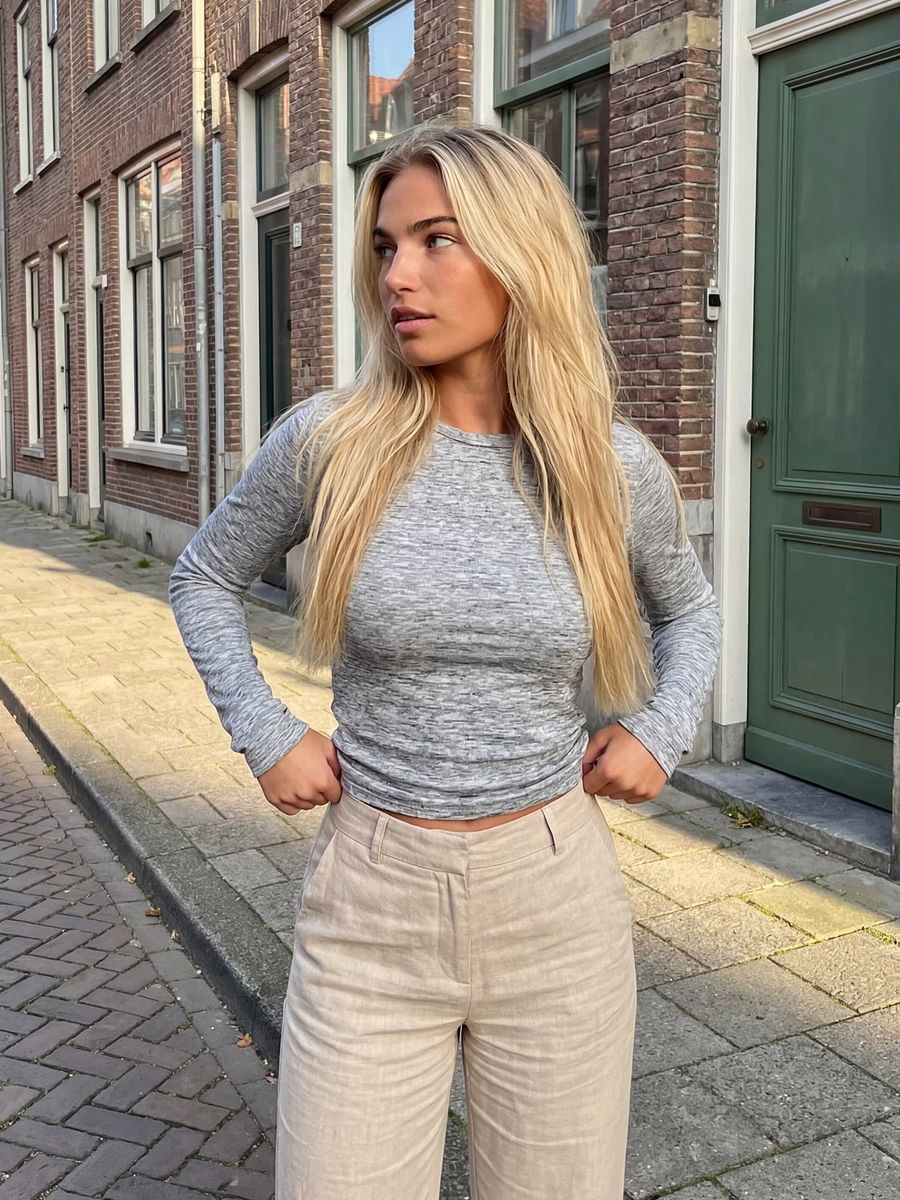
Camera angle decides how your subject comes across: shoot someone from below (low angle) and they look bigger and more dominant; from above (high angle) they look smaller and more vulnerable; and at eye level it reads as neutral and equal. In AI images you set that angle with a few words in your prompt, yet many creators leave it on the default. Below you'll read what each angle does, what research says about it, and how to name it properly.
The three camera angles and what they do
Camera angle is the height and viewing direction of the camera relative to your subject. Three basic angles cover most cases:
- Eye level. The camera sits at your subject's eye height. This is the neutral, natural gaze: equal and recognisable. The default for portraits and most influencer content.
- Low angle. The camera sits lower and looks up. Your subject looks bigger, stronger, sometimes imposing. Useful for a powerful or heroic feel.
- High angle. The camera sits higher and looks down. Your subject looks smaller and more vulnerable, and the viewer gets an overview.
Two extra angles you'll often need: the bird's eye view (straight down, top-down) for flat compositions like a flatlay, and the dutch angle (a tilted horizon) for tension or unease.
What does research say about eye level?
Eye level reads as the most trustworthy, and both a lower and a higher camera undercut that. In a study by Baranowski and Hecht (2018) in Empirical Studies of the Arts, viewers rated twelve actors as most trustworthy when they were filmed at eye level; tilting the camera up or down lowered that trustworthiness (Baranowski & Hecht, 2018).
So the popular rule of thumb "low angle is power, high angle is weak" is only partly true. A low angle makes someone look bigger and more dominant, but not automatically more likeable or credible. If you want people to trust your persona, eye level is often the safest choice. If you're after awe or drama instead, you deviate from it on purpose.
How do you name the camera angle in your prompt?
Put the angle as its own term in your prompt; models recognise the fixed English labels from photography and film that they were trained on. A few words already steer the image.
- Eye level:
eye-level shot,at eye level - Low angle:
low-angle shot,shot from below,worm's eye view(extreme) - High angle:
high-angle shot,shot from above - Straight down:
bird's eye view,top-down,overhead shot - Tilted:
dutch angle,tilted horizon
Combine the angle with your shot size and lens for a more precise result, for example "low-angle medium shot, 35mm". Not sure how to phrase it? A prompt generator turns your idea into a clean description with the camera position included.
Which angle fits which goal?
Choose the angle to match the feeling you want to convey, not the other way around.
- A portrait or influencer that should feel approachable: eye level, maybe a fraction lower for a flattering line.
- Authority, fashion editorial or a hero shot: low angle, so the subject fills the frame.
- Narrative, vulnerable or an overview: high angle.
- Product or flatlay: bird's eye view, straight down.
A subtle pitfall: a camera that's too low and close to a face distorts the features (large jaw, small crown). Step back a little or use a longer lens.
Camera angle in AI video
In video the camera angle works just like in photo, with one extra thing to watch: keep the angle consistent per persona and scene. Switch from eye level to high angle within the same clip for no reason and it looks restless.
In the video generator, describe the fixed angle first and then the camera move, for example "low-angle shot, slow push-in". That way the model knows where it starts before it moves. Building a series of clips with the same persona? Pick one base angle on purpose and hold on to it, just as you keep the face and clothing consistent.
Frequently asked questions
What's the difference between camera angle and shot size?
Camera angle is the height and viewing direction of the camera (from below, eye level, from above). Shot size is how close you are (close-up, medium, wide). They work together, but you steer them separately in your prompt.
Which camera angle is best for an AI portrait?
For most portraits eye level is the safest choice: it looks natural and trustworthy. Want more drama or authority, then a slight low angle works; for a vulnerable or narrative feel a high angle.
Does every AI model understand these terms?
Most modern photo and video models recognise standard terms like "low-angle shot" and "bird's eye view" well. Extreme or unusual angles are hit and miss; in that case test a few renders and pick the best.
A camera angle costs you one line in your prompt but changes the entire impression of your image. Create an account and render the same scene in the photo generator at eye level, low angle and high angle side by side. You'll see straight away which one hits the feeling you're after.