2026-07-22
Too clean to be real: adding imperfection to AI images
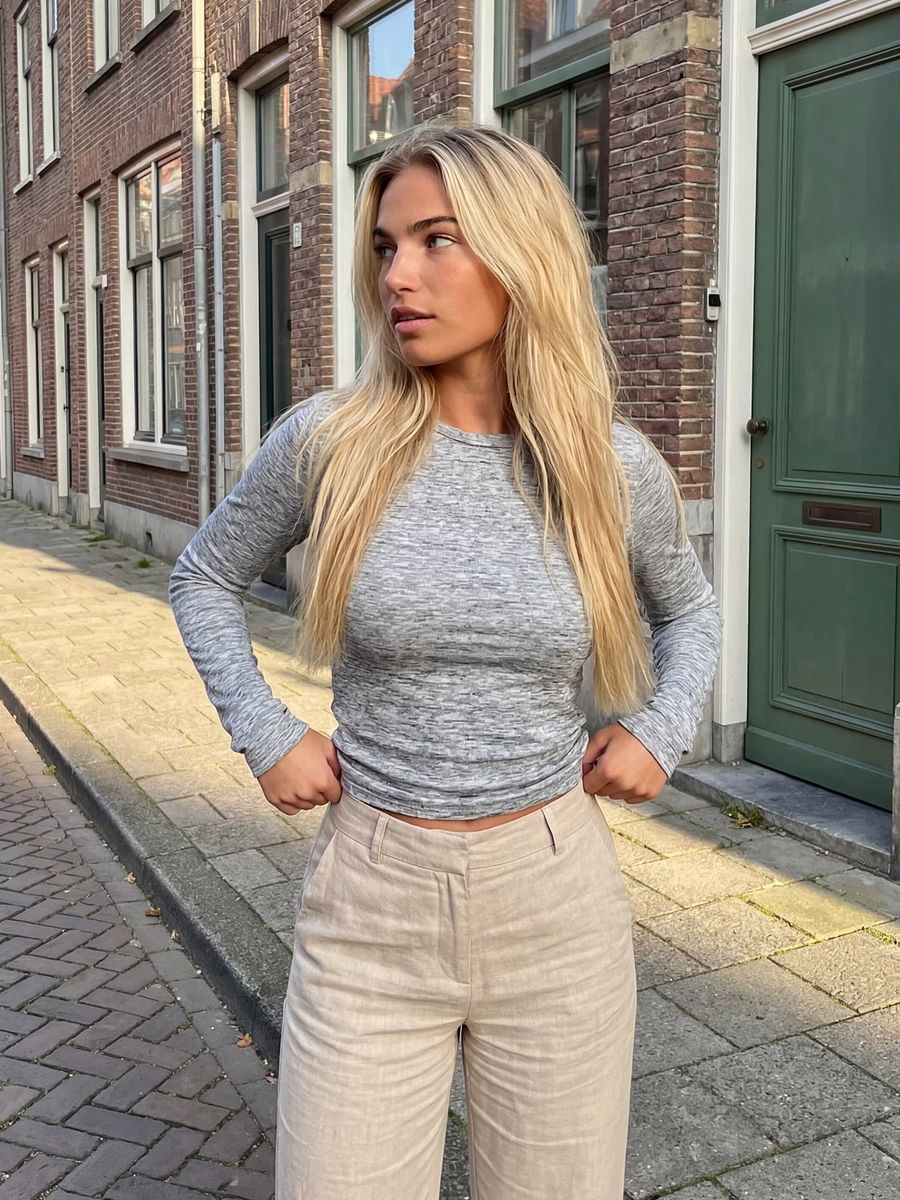
An AI image often looks fake because it is too clean: every surface new, every edge crisp, no trace of use anywhere, and you fix that by deliberately naming wear, clutter and signs of life in your prompt. Image models generate what is statistically likely, and that average contains no coffee stain in exactly that one spot. Below you will read why models make everything too tidy, which traces make a scene believable, and how to dose them without your image turning messy.
Why AI images are too clean by default
An image model does not draw a specific room but something close to the average of countless similar rooms, and in that average, scratches, stains and stray objects cancel each other out. What remains is a space where everything is equally new and equally tidy: the showroom look. On top of that, training data leans heavily on polished stock and product photography, which reinforces the effect.
That pull toward the average is well documented for faces. In a study published in PNAS, participants could not reliably tell synthetic faces from real ones, and they even rated the synthetic faces as more trustworthy; the researchers point out that generated faces resemble average faces (Nightingale & Farid, PNAS 2022). What holds for faces holds for scenes too: the model picks the safe middle ground, and the middle ground has no dents.
Still, viewers do not simply look past it. In an experiment by Microsoft's AI for Good Lab, covering roughly 287,000 image evaluations by more than 12,500 participants, people recognized AI images 62% of the time, only slightly better than a coin flip; images without obvious artifacts or stylistic cues proved hardest to spot (Microsoft Research, 2025). The too-clean look is exactly such a stylistic cue. Remove it, and you remove one of the viewer's last footholds.
Wear belongs in logical places
Wear only makes an image more real when it sits where hands, feet and weather actually go. Random scratches do not make a scene more believable, they make it restless.
- Edges and corners. Paint and varnish wear first on the edges of doors, tabletops and stair treads.
- Contact points. Surfaces go dull and darker around door handles, railings and light switches.
- Walking paths. Floors wear in lanes, not evenly: in front of the door, along the counter, down the middle of the stairs.
- Outdoors. Rain streaks under window sills, moss in the joints, a faded shop sign, a crooked paving stone.
Useful building blocks: worn edges on the table, scuffed floor near the doorway, paint rubbed off around the door handle, weathered facade with rain streaks. One or two details like this per image is enough.
Signs of life: the difference between a set and a space
A space feels inhabited through what people leave behind in it. Name those traces as concrete objects, because a vague word like "messy" produces chaos instead of atmosphere.
- A half-empty glass on the table, a jacket over the back of a chair, a charging cable that has not been tucked away.
- Asymmetry: chairs not pushed in perfectly straight, a picture frame hanging a fraction crooked.
- Age differences between objects: a new phone next to an old wooden cabinet reads like a real home, an interior where everything is equally new reads like a furniture catalogue.
- Outdoors: a parked bicycle, a waste container half in frame, wet patches that have not dried yet.
Building blocks: lived-in interior, everyday clutter: a coffee cup, opened mail, a charging cable, mismatched furniture, slightly crooked picture frame. Your subject may carry traces too: wrinkles in clothing and a few stray hairs do more for believability than a flawless outfit.
Dosing: imperfection must not steal the gaze
The rule is simple: the closer to your subject, the subtler the trace. Clutter and wear should support the story, not draw attention to themselves.
- Put busy details in the background or outside the plane of focus, for example with
cluttered shelf softly out of focus in the background. - Limit yourself to two or three deliberate traces per image. More rarely gets noticed and crowds the composition.
- Keep the traces consistent with the story: no winter residue in a summer scene, no brand-new clutter in a weathered warehouse.
When in doubt, go for fewer but more specific. One well-placed coffee cup tells more than ten vague stains.
Checking and fixing precisely
Three quick checks before you publish. If everything in frame is equally new and equally clean, you have a showroom. If the wear sits somewhere nobody ever walks or grabs, it gives itself away. And if one clutter detail draws more attention than your subject, it is too much.
If the scene is off in just one spot, you do not need to re-render everything. With the AI editor you add a trace of use or remove a distracting detail precisely, without changing the rest of the image. That saves renders, and you pay per edit instead of per month.
Frequently asked questions
Why do my AI images look so sterile?
Image models generate the statistically likely average of their training data, in which scratches, stains and clutter cancel each other out. Without steering, you end up with a scene where everything is equally new.
Does "imperfections" or "flaws" work as a prompt word?
Usually not, it is too vague. Name the trace itself and its location: scuffed floor near the doorway or a coffee cup and opened mail on the counter steers far more reliably than a generic term.
How much clutter should I add?
Two or three deliberate traces per image is enough: one patch of wear in a logical place, one sign of life and perhaps some asymmetry. More makes the image restless without making it more real.
Can I add imperfection afterwards?
Yes. With inpainting in the AI editor you regenerate only the area where you want to add or remove a trace, while the rest of the image stays intact.
Imperfection is one of the cheapest upgrades for your AI image: it costs no extra render, just a few more precise words. Create an account and test it in the photo generator. Render the same space twice, once bare and once with three named signs of life, and see which version you believe yourself.